Frequently Asked Questions (FAQ): Employee Theft in Retail — and How AI Stops It

De Flow AI Team
Frequently Asked Questions (FAQ): Employee Theft in Retail — and How AI Stops It
Introduction
Retail "shrink" hit $112.1 billion in 2022, according to the latest National Retail Security Survey by the National Retail Federation. Roughly 29% of that loss comes from employees, not shoplifters, notes Retail Dive. With organized crime adding pressure — and even forcing chains to lock items behind plexiglass, as Axios reports — retailers are turning to AI to cut internal theft and reclaim profit.
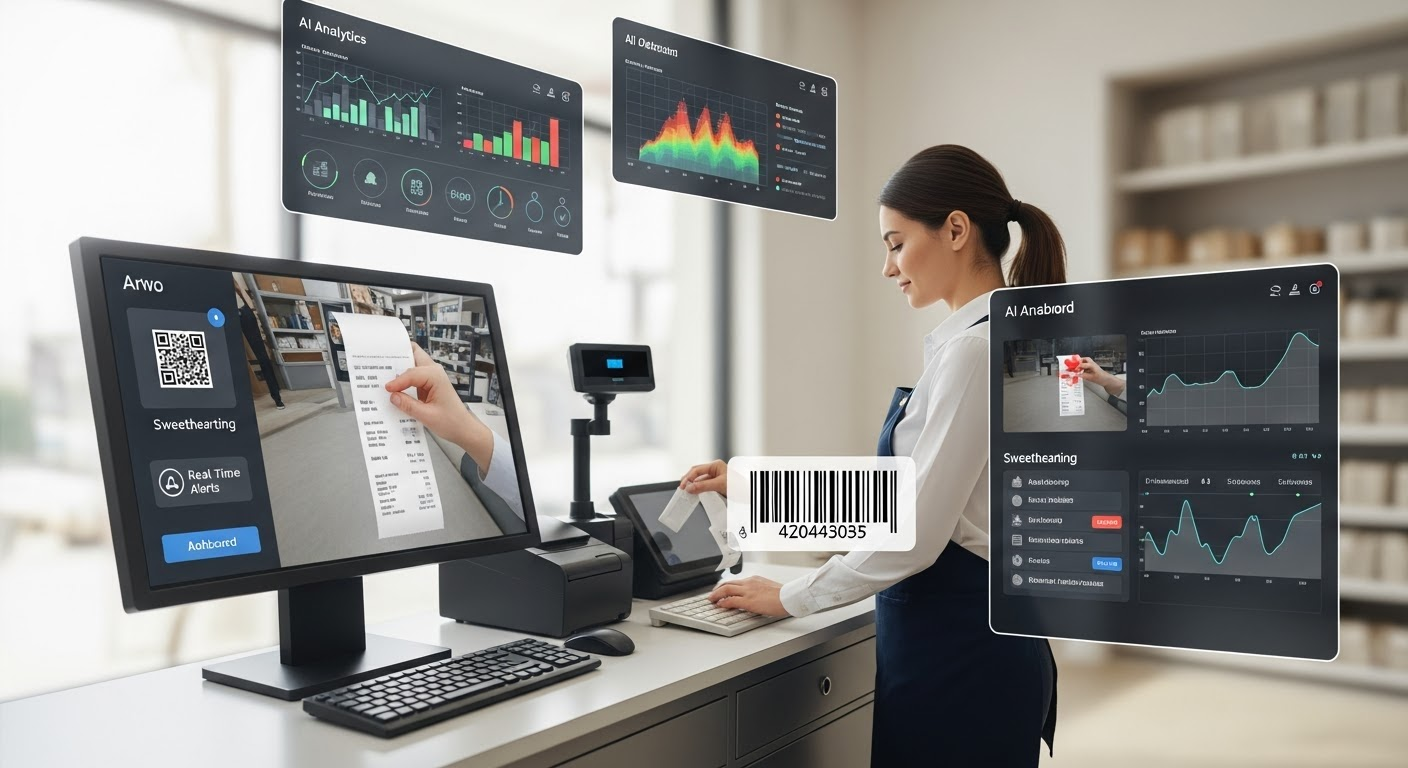
How can I spot "sweethearting" at the till?
Vision-AI lines up every SKU the camera sees with the barcode list in real time; a mismatch (e.g., an item bagged but not scanned) pings LP in < 2 s. Chains piloting this saw ≈ 30% less internal shrink and 3-4× ROI in Year 1, per Forbes Tech Council and McKinsey.
Void fraud vs. refund fraud — what's the difference, and how does AI block them?
| Fraud type | Typical pattern | AI safeguard |
|---|---|---|
| Void fraud | Cashier completes a sale, pockets the cash, then voids the ticket | Frame-by-frame video-to-receipt sync flags any void that lacks a matching product return |
| Refund fraud | Employee issues a refund without merchandise coming back | Anomaly-detection models profile each cashier; spikes trigger review |
Return fraud alone drained $101 billion in 2023, says Forbes Business Council, while the Association of Certified Fraud Examiners tracks thousands of occupational-fraud cases in its biennial report (ACFE).
Which KPIs really matter for stopping employee theft?
| KPI | "Green" benchmark | Why it matters |
|---|---|---|
| Internal-shrink % | ≤ 0.4% of sales | Direct P&L hit — Deloitte highlights it in its AI-in-retail guide (Deloitte) |
| Exceptions / 1,000 tx | ≤ 3 | Shows checkout-process health |
| Avg. refund value | ±10% vs. category | Spots big-ticket abuse |
| Cam-POS latency | ≤ 2 s | Enables on-the-spot intervention |
Convenience stores benchmark similar metrics through the NACS Research portal.
What decides whether AI cameras earn their cost?
Not a question anyone can answer for you, and be wary of a vendor who tries. Payback is your shrink rate, the share of it a camera can actually address, and your own cost of capital — three numbers we do not have. Industry write-ups on AI in retail circulate payback ranges, but they describe other retailers' estates, usually without saying which loss categories were counted; treat them as evidence the question is worth asking, not as an answer to it. The measurable starting point is on your side: count the stock, agree the period, and compare.
What red flags signal an "inside job"?
- High void/refund frequency
- Repeated schedule swaps to dodge oversight
- Lingering in back-room or high-value zones (mapped by staff heat-maps)
- Manual discounts outside policy
The FBI's larceny-theft stats show employee embezzlement spikes around holidays, while the U.S. Chamber of Commerce finds 56% of small retailers hit by theft say the problem is getting worse.
What does "doing nothing" cost?
At a $100M chain running 0.6% internal shrink, the annual leak is $600k. Cutting that in half (0.3%) puts $300k back on the bottom line. See the math in the NRF report above and in broader loss figures from Investopedia.
What infrastructure do I need to start?
- HD cameras (≥ 30 fps) covering every till and stock exit
- Real-time POS / ERP API for SKU-level logs
- Edge or cloud compute to run CV + ML 24/7
- Unified dashboard for shrink, exception heat-maps and ROI tracking
Trust and transparency matter, too; MIT Sloan stresses employee buy-in when rolling out AI surveillance (MIT Sloan), while the National Association for Shoplifting Prevention offers training resources for staff.
How De Flow AI removes the pain
De Flow AI snaps into your existing cameras and POS to deliver:
- Cross-View AI — matches video & receipts to catch sweethearting/void fraud
- Refund Guardian — blocks phantom refunds before approval
- Behaviour Heat-maps — surfaces "red zones" automatically
- Live ROI Dashboard — tracks shrink %, exceptions and dollar savings in one place
Want a live demo?
Schedule a call and see how to cut employee theft in half — no new cameras required.
Article prepared for the De Flow AI blog using data published 2023 – 2025.
Want to see how this works in your stores?
Tell us about your business and we’ll come back with a practical plan — no commitment.